Using Content Clusters to Establish Topical Authority in Wellness
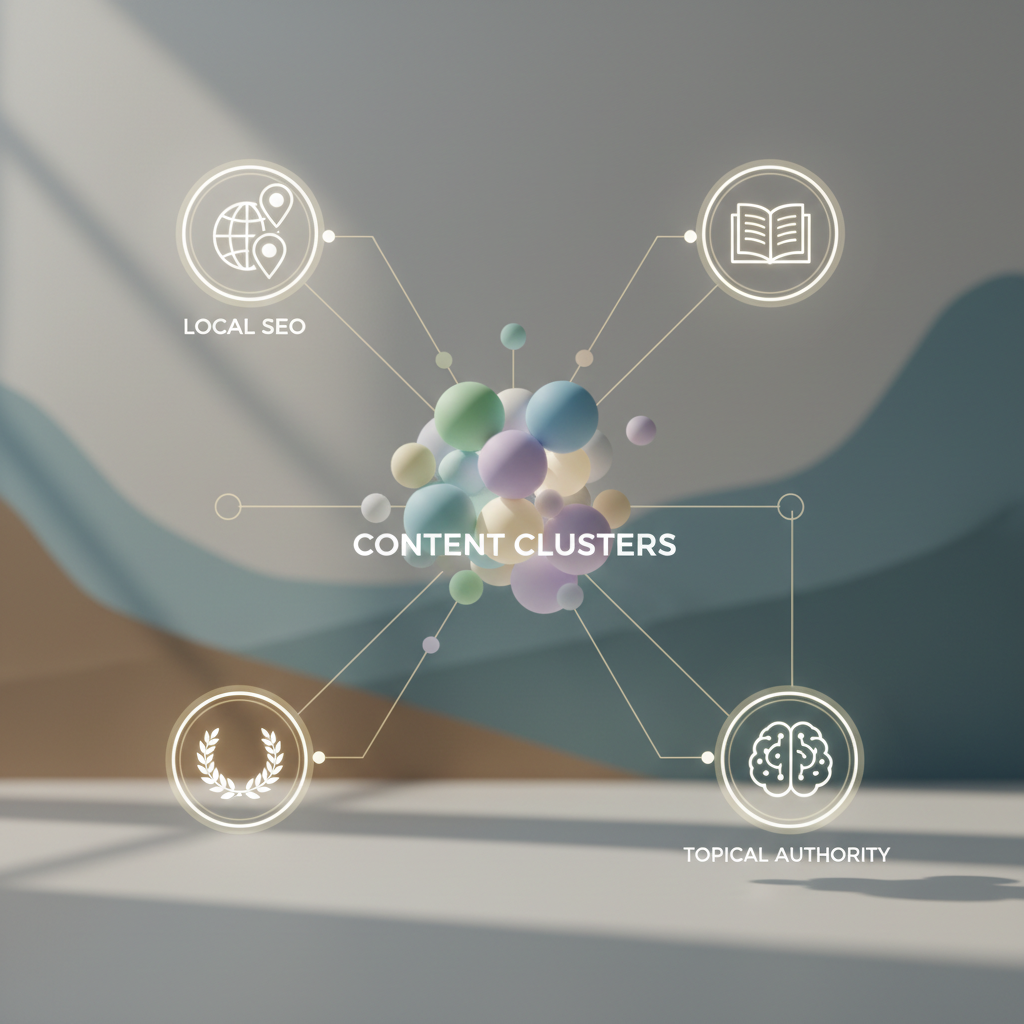
Using Content Clusters to Establish Topical Authority in Wellness
What if the secret to dominating local wellness search results isn't about creating more content, but about organizing what you create more strategically?
In today's AI-driven search landscape, wellness practitioners face a paradox: search engines are getting smarter, yet standing out is harder than ever. Google's algorithms and AI tools like ChatGPT, Perplexity, and Gemini don't just look at individual pages anymore—they evaluate your entire digital presence to determine whether you're a credible authority on wellness topics. This is where content clusters transform from marketing buzzword to competitive advantage.
Content clusters represent a fundamental shift in how search engines evaluate expertise. Instead of isolated blog posts competing independently, interconnected content ecosystems demonstrate comprehensive knowledge across your wellness specialty. For ZenRank, this approach isn't theoretical—it's the foundation of how we help wellness practices become the go-to resource in their communities.
Key Takeaway
Content clusters organize related wellness topics around central themes, signaling expertise to AI systems and dramatically improving local search visibility.
Why Content Clusters Matter More Than Ever
Think of traditional SEO content like individual trees scattered across a field—each one stands alone, hoping to be noticed. Content clusters, by contrast, create a forest ecosystem where each piece strengthens the others. According to HubSpot's research, businesses that implement topic cluster strategies see 3x more traffic to their pillar pages and improved rankings across related keywords.
Here's the lesser-known insight: AI recommendation engines don't just analyze keywords anymore. They map semantic relationships between your content pieces. When ChatGPT or Google's Search Generative Experience evaluates whether to recommend your practice, it's essentially asking, "Does this practice demonstrate comprehensive understanding of this wellness topic?" A well-structured content cluster answers with a resounding yes.
For wellness practitioners, this shift is particularly significant. Patients researching acupuncture, nutrition counseling, or physical therapy aren't just looking for a single answer—they're exploring interconnected questions about symptoms, treatments, costs, and outcomes. When your content mirrors this natural exploration pattern, you become indispensable.
Phase 1: Establishing Your Cluster Foundation
Identify Your Core Wellness Topics
Start by examining what makes your practice unique. What conditions do you treat most frequently? What questions do patients ask repeatedly during consultations?
Step 1: List 3-5 primary services or specialties your practice offers. For a wellness practice, this might include chronic pain management, stress reduction, nutritional counseling, or sports injury recovery.
Step 2: For each primary topic, brainstorm 8-12 related subtopics that patients actually search for. Use tools like Google's "People Also Ask" feature, AnswerThePublic, or simply review your intake forms to identify common concerns.
Step 3: Validate search intent by checking whether these subtopics generate actual searches in your geographic area. Google Keyword Planner and Google Trends filtered by location provide this intelligence.
Common pitfall: Many practitioners choose topics they find intellectually interesting rather than what patients actually need. Always prioritize patient questions over professional fascination.
Create Your Pillar Content
Your pillar page serves as the comprehensive hub—think of it as the definitive guide to a major wellness topic relevant to your practice.
Step 4: Draft a 2,500-3,500 word pillar article that provides a thorough overview of your chosen topic. This should answer fundamental questions while naturally pointing toward more detailed subtopics.
Step 5: Structure this pillar content with clear sections that correspond to your identified subtopics. Each section should offer valuable information while creating natural opportunities to link to deeper, specialized content.
Step 6: Optimize your pillar page for both traditional search and AI recommendations by including:
Clear definitions and explanations
Evidence-based information with credible sources
Local context (your community, nearby landmarks, regional health concerns)
Practical next steps for readers
The pillar page for ZenRank's clients typically becomes the most-visited page after the homepage, serving as the gateway to the entire content ecosystem.
Phase 2: Building Your Cluster Content
Develop Comprehensive Cluster Articles
Now comes the systematic creation of supporting content that surrounds your pillar topic.
Step 7: Create one detailed article (1,000-1,500 words) for each subtopic identified in Phase 1. Each piece should thoroughly address a specific patient question or concern.
Step 8: Establish clear linking patterns:
Each cluster article links back to the pillar page using descriptive anchor text
Each cluster article links to 2-3 related cluster articles
The pillar page links out to all cluster articles
Step 9: Incorporate local elements throughout your cluster content. Mention your specific location, reference local health trends, and address region-specific concerns. This geographical specificity helps AI systems understand your relevance for local searches.
Example structure: If your pillar topic is "Comprehensive Acupuncture for Chronic Pain," cluster articles might include:
"How Acupuncture Addresses Lower Back Pain: What to Expect"
"Acupuncture vs. Physical Therapy for Sports Injuries"
"Understanding Acupuncture Costs and Insurance Coverage"
"What Happens During Your First Acupuncture Session"
"Evidence-Based Benefits of Acupuncture for Migraine Relief"
Optimize for AI Recommendation Systems
Step 10: Structure your content to answer questions directly and comprehensively. AI systems increasingly favor content that provides complete answers rather than requiring users to visit multiple sources.
According to research from Semrush, content that appears in AI-generated responses typically demonstrates:
Clear, concise answers in the first 100-150 words
Supporting evidence from authoritative sources
Practical, actionable guidance
Natural language that matches conversational queries
Step 11: Implement schema markup across your cluster content. Use Article schema, FAQPage schema, and LocalBusiness schema to help AI systems understand your content structure and local relevance.
Surprising insight: Many wellness practitioners overlook the importance of updating publication dates. AI systems favor recent content, so regularly refreshing your cluster articles with new research, updated statistics, or expanded sections signals ongoing expertise.
Phase 3: Amplification and Maintenance
Strengthen Your Authority Signals
Step 12: Build external validation for your content cluster by earning backlinks from complementary local businesses, health directories, and community organizations. A link from your local hospital's resource page or a partnership with a nearby gym carries significant weight.
Step 13: Create supporting content formats that reinforce your cluster topics:
Video content addressing cluster topics (hosted on YouTube with links back to your articles)
Downloadable guides or checklists that require email signup
Social media posts that drive traffic to specific cluster articles
Step 14: Monitor which cluster articles generate the most engagement and expand them. Add new sections, update statistics, incorporate patient FAQs, and deepen the analysis. Growing your strongest content compounds its authority.
Track Your Cluster Performance
Step 15: Establish baseline metrics before your cluster strategy launches:
Current organic traffic to wellness-related pages
Average time on page for educational content
Conversion rate from content to consultation bookings
Local search rankings for primary keywords
Step 16: Monitor cluster-specific performance indicators:
Internal link click-through rates (which cluster articles drive traffic to others?)
Pillar page ranking improvements
Featured snippet captures
Mentions in AI-generated responses (search your topics in ChatGPT, Perplexity, etc.)
Step 17: Conduct quarterly content audits. Identify gaps where new cluster articles would strengthen the ecosystem, update statistics and research citations, and refine internal linking based on user behavior data.
Timeline Expectations: Your 90-Day Roadmap
Understanding realistic timelines prevents frustration and helps you maintain momentum.
Weeks 1-2: Research and strategy development. Complete Steps 1-3, identifying your core topics and validating search demand.
Weeks 3-4: Pillar content creation. Draft, edit, and publish your comprehensive pillar page (Steps 4-6).
Weeks 5-10: Cluster content development. Create and publish 6-8 cluster articles, one every 7-10 days. This pacing allows for quality while building momentum (Steps 7-9).
Weeks 11-12: Technical optimization. Implement schema markup, refine internal linking, and optimize for AI systems (Steps 10-11).
Month 4 and beyond: Amplification and maintenance phase. Focus on building external validation, creating supporting formats, and monitoring performance (Steps 12-17).
According to Ahrefs' analysis of ranking factors, most content takes 3-6 months to reach its full ranking potential. For content clusters, expect to see initial improvements within 60-90 days, with compounding benefits over 6-12 months as the ecosystem matures.
Critical consideration: Don't expect overnight results. Content clusters build authority gradually but sustainably. The practices that succeed are those that commit to consistent execution rather than seeking quick wins.
Who It's For
Established wellness practices ready to invest in long-term visibility strategies
Practitioners who regularly answer the same patient questions and want to scale their expertise
Wellness professionals competing in saturated local markets who need differentiation
Practices with existing content that needs strategic reorganization for better performance
Health and wellness providers committed to educational content as a patient acquisition strategy
Who It's Not For
Brand-new practices without foundational website infrastructure or basic SEO in place
Practitioners seeking immediate results within 30 days or less
Wellness professionals unwilling to consistently create quality content over several months
Practices that view content creation as a one-time project rather than ongoing strategy
Insight
Content clusters represent a significant shift from traditional "more content is better" approaches to strategic, interconnected content ecosystems. In my experience working with wellness practices, those that implement cluster strategies typically see more qualified patient inquiries because the content naturally pre-educates prospects. The time investment is substantial upfront but creates compounding returns as AI systems increasingly recognize your topical authority. This approach aligns particularly well with building visibility for local wellness practices because it addresses both traditional search engines and emerging AI recommendation systems simultaneously.
Safety & Considerations
Never sacrifice content quality for quantity when building clusters—thin, superficial content damages rather than builds authority
Ensure all wellness claims are evidence-based and properly cited; misleading health information can harm patients and damage your practice reputation
Regularly update cluster content to reflect current research and best practices; outdated medical information creates liability concerns
Be transparent about your credentials and scope of practice; content should reflect your actual expertise and licensure
Consider having cluster content reviewed by colleagues or professional editors before publication to ensure accuracy and appropriate tone
Your Content Cluster Action Plan
The practices dominating local wellness search results in 2026 aren't creating more content—they're creating smarter content architectures. Content clusters transform scattered blog posts into authoritative knowledge bases that both patients and AI systems recognize as valuable.
Your next step is identifying which wellness topic represents your strongest competitive advantage. What do you know better than any other practice in your area? That expertise becomes your first content cluster.
The integration with how AI is changing local SEO for wellness professionals means your cluster strategy needs to account for both traditional search rankings and AI recommendation algorithms. This dual optimization approach positions your practice for sustained visibility regardless of how search technology evolves.
Remember: content clusters aren't built in a weekend. They're constructed methodically over months, with each piece strengthening the whole. The practices that start today will dominate their local markets tomorrow—not through luck, but through strategic, patient-focused content architecture.
Start with one pillar topic. Create one exceptional hub of information. Then systematically build the supporting content that demonstrates your comprehensive expertise. That's how you transform from just another wellness practice into the recognized authority in your community.
Next Step
Ready to build a content cluster strategy that establishes your practice as the local authority? Book now.
ZenRank serves wellness practices nationwide, helping practitioners implement strategic content systems that drive qualified patient inquiries through improved search visibility.
About the Reviewer
Matthew Loughran, Principal Consultant
Credentials: MBA
Wondering how to leverage AI for your small business without getting lost in tech jargon? I help small and medium-sized business owners transform their operations with AI through simple, actionable strategies. I'm on a mission to democratize artificial intelligence, making it accessible and understandable for entrepreneurs just like you.
With over 15 years of experience in emerging technologies, including fintech, AI, and Web3, I've guided numerous startups and established firms to achieve product-market fit and drive social impact. My work has been recognized at the highest levels, including collaboration with The Vatican's Dicastery for Promoting Integral Human Development and receiving the Laudato Si Business Impact Award.
My academic background includes a B.S. in Biology and Marketing from Loyola University Maryland, an Executive M.B.A. from Washington State University, and a certification in Impact Measurement and Management from Duke University. This diverse education, combined with my hands-on experience, allows me to bridge the gap between complex AI concepts and practical business applications.
Last reviewed: January 2026
Sources & Further Reading
HubSpot's Topic Cluster Research and Implementation Guide - Comprehensive analysis of topic cluster performance metrics and implementation strategies
Semrush's Study on Content Optimization for AI Search - Research on how AI systems evaluate and recommend content
Ahrefs' Analysis of Content Ranking Timelines - Data-driven insights on realistic SEO timeline expectations
Google Search Central Documentation on Structured Data - Official guidance on implementing schema markup for improved search visibility
Moz's Local SEO Best Practices for Health and Wellness - Evidence-based strategies for improving local search performance in healthcare sectors